Boom. And the first draft is complete.
A mere eleven months, 90,401 words and 383 pages of double-spaced size 12 Courier New later, I can now say:
“Why yes, I have written a novel. Thanks for asking. I’ll have a glass of the Malbec.”
Author of THE UNITY SEQUENCE. Doing the right thing for Alderaan reasons since 2012.

Boom. And the first draft is complete.
A mere eleven months, 90,401 words and 383 pages of double-spaced size 12 Courier New later, I can now say:
“Why yes, I have written a novel. Thanks for asking. I’ll have a glass of the Malbec.”
Nice post on io9 here.
I’m drawn to the Anachronista category – the others don’t do a lot for me. I’m no good at history so hardly qualified to suggest alternates. Cheese is . . . well, cheesy. And I think there are enough people writing steampunk – the best example of it, China Mieville’s work, doesn’t even get called it because it’s so much more as well.
But anachronista, that I could do. The next book I’ve got planned is somewhat tinged with this – it’s a Chandler-style detective noir, but set in the same technologically advanced far-future universe of my current WIP.
It wouldn’t quite fit the anachronista mould the io9 article talks about, as it’ll be stylistically redolent of 1930s/40s/50s pulp crime lit, rather than actually containing any technology that you might have found back then. But still – that’s one of the things I love about SF, the scope to combine it with another genre entirely and come up with an interesting hybrid. I’m looking forward to writing it.
Great review of John Scalzi’s Redshirts at Tor.com here.
“Redshirts is not merely a satire of the conventions of popular science fiction as a genre (although it is an excellent satire), it’s a harsh critique of waste. Why should we allow ourselves to be thrilled and horrified by the senseless deaths of fictional characters when we could be equally entertained by the stories that those characters carry within them?”
I’m looking forward to reading this. I’m sure it’s a little more high brow a commentary on the redshirt trope than the (still brilliant) one on Family Guy:
Captain Kirk: “All right, men. This is a dangerous mission. And it’s likely one of us will be killed. The landing party will consist of myself, Mr. Spock, Dr.McCoy…and Ensign Ricky.”
Ensign Ricky: “Ah, crap.“
Another good read on Emma Darwin’s blog here.
It seems like every couple of months I’ll read some industry insider’s comment that the market for SF/F is decreasing, then another saying that it’s never been stronger. It’s hard to know what to expect when I do get to the point of actually pitching a manuscript – whether an SF thriller in today’s market can be said to ‘have a good chance’.
But I’m not sure it matters to me – as the article says, you need to write something that you care about, or it’ll be tough, and you’ll hate it, and even if you do finish it won’t end up with the kind of soul that you impart to something you love. I’m pretty sure I’ll only ever want to – or maybe even be able to – write science fiction. Where that will get me in future, who knows!
The trailer for the sort-of-prequel to Alien is out, and looking spectacular with a capital spectacle:
Anything with Stringer Bell in it is worth seeing, in my book.
Great article on Tor.com here.
This piece reminds me of one of the best pieces of advice for science fiction or fantasy writers that I’ve ever read. My sieve-like memory for detail doesn’t allow me to quote or even paraphrase the source, but the essence of it was that in the best SF/F the science or the fantasy isn’t the centre of the story. They’re the framework, the setting, and probably certain plot drivers, which surround the actual heart – the people and civilisations interacting, the personality and culture clashes which resonate with the reader because of their familiarity.
Iain M. Banks is the master at this, in my opinion. His Culture novels – the name itself flagging up the key theme – are anthropological masterpieces, often based around one civilisation (the Culture) being far more technologically advanced than the other that they’re interacting with, and dealing with the political and sociological fallout of even the most benevolent interventions. We can all recognise the parallels in that, I think.
“This has all happened before, it will all happen again” indeed.
Just got home from my buddy Jeff’s place. Driving back, I was struck by the same feeling I get every time I’m in a car in São Paulo. The narrowness of most streets, the height of the buildings that line them, looming fifteen, twenty storeys high in concrete and steel and glass.
This isn’t a pretty city. Booming, thriving, vibrant, alive, a powerhouse fuelling one of the strongest economic booms of this century so far – but not pretty.
And every time I drive these streets and look out of the cab window, catching a glimpse of sky every ten seconds or so through a gap between two towers, my thoughts turn to those future cities of my imagination, those cityscapes where fifty storey scrapers are the norm, where a population boom crams tens of thousands into a hundred square yards.The ugly and beautiful, dystopia or utopia, but all squeezed together cheek by jowl and reaching for all the stars above all the worlds that we’ll have conquered.
My futurescapes.
The Chronicles of Malus Darkblade: Volume One – Dan Abnett and Mike Lee

Also on my reading pile is this, a compilation of the first three books of (apparently) the second most popular series in the Warhammer canon. Read more…>
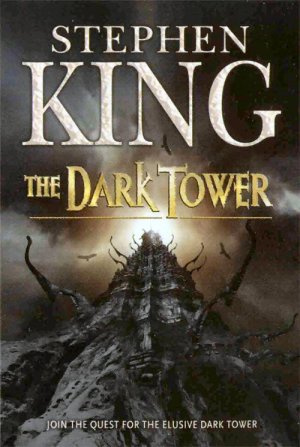
The Dark Tower, Book VII – Stephen King
(Look away now if you plan to read this at some point and want to avoid spoilers.)
Still here? Good.
I’m nearing the end of this, the last book of King’s epic fantasy saga – essentially one million-word novel, written over the course of seven books and twenty years. I’ll not go into great detail or summarise: there are a wealth of analyses of the series online already. But I did want to talk a little about the sheer audacity of one of the elements of the novel. Read more…
 DAN HARRIS: 10% SCI, 90% FI